Most businesses have backups. Far fewer know whether those backups will actually work when they’re needed.
That’s an important difference.
A backup is simply a copy of your data. Recovery means you can restore that data, access your systems, and get your team working again—within a timeframe your business can tolerate.
Think about a smoke alarm. You don’t test it because you expect a fire. You test it so you don’t discover a dead battery during one.
Your backups deserve the same attention.
A “Successful” Backup May Not Be Enough
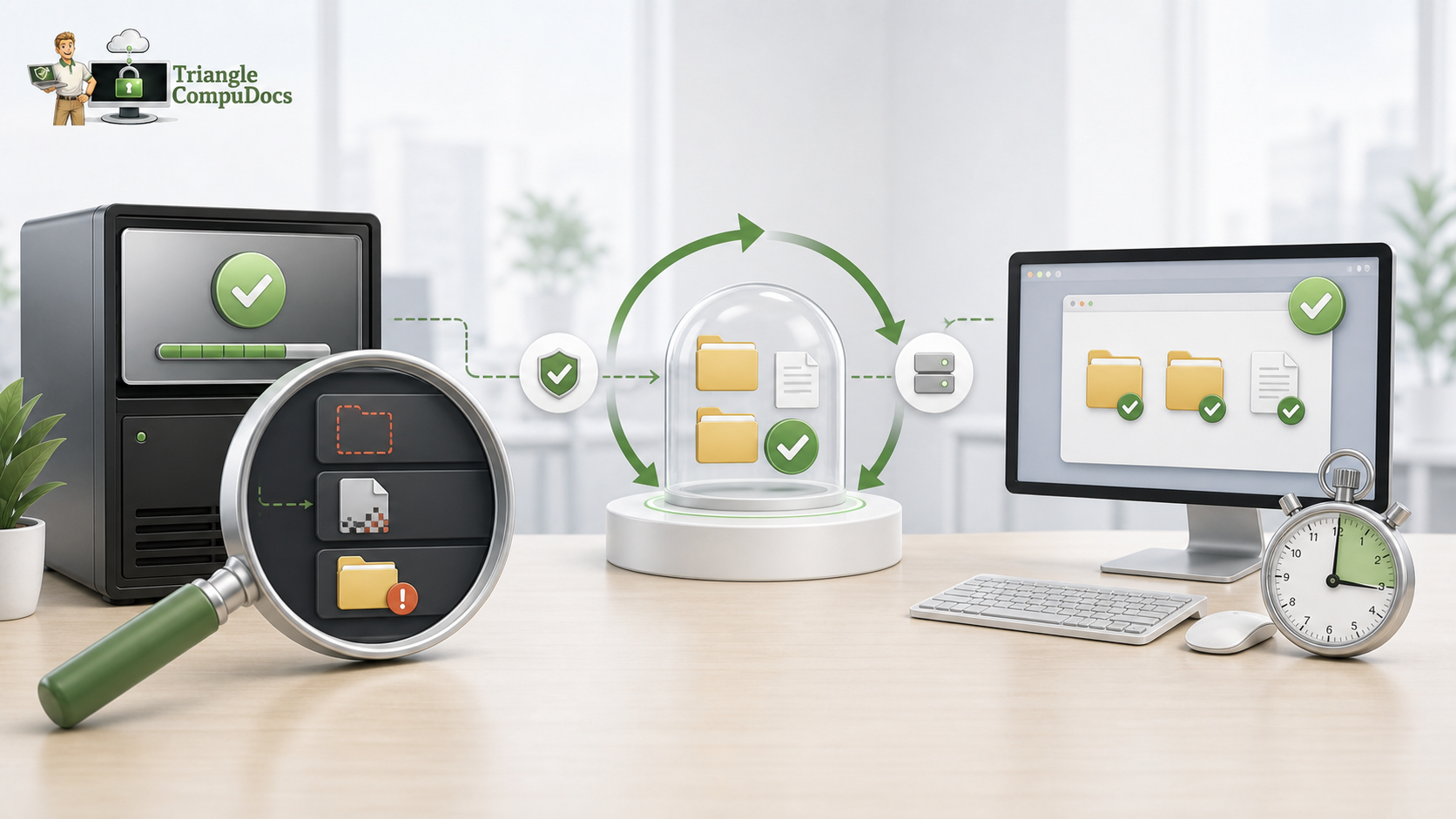
Backup systems can fail quietly. Files may be missing, data may become corrupted, permissions can change, or an application may not restore correctly. Even cloud-based platforms don’t automatically guarantee that deleted or compromised data can be recovered the way you expect.
Meanwhile, your dashboard may continue showing a reassuring green checkmark.
The worst time to discover a problem is when employees are already unable to work and customers are waiting for answers.
Three Questions Every Business Should Ask
You don’t need to become a recovery expert, but you should be able to answer three basic questions:
- Are we protecting the right information?
Identify the files, applications, and systems your business cannot operate without. - How quickly can we restore them?
“Eventually” is not a recovery plan. Know how much downtime your business can realistically tolerate. - Does everyone know what happens next?
Assign responsibility before an outage. Your team should know who to contact, what to prioritize, and how to communicate.
Put Your Recovery Plan to the Test
A recovery test doesn’t have to disrupt the business. Start small:
- Choose one critical file, folder, or application.
- Restore it in a safe environment.
- Confirm that the restored information is complete and usable.
- Record how long the process takes.
- Document any problems and assign someone to correct them.
- Schedule the next test.
This simple exercise can uncover gaps while they are still manageable.
Resilience Requires More Than Prevention
Security tools, updates, and employee training all help reduce risk. But no system can prevent every equipment failure, cyberattack, human mistake, or unexpected outage.
The goal isn’t perfection. It’s making sure one problem doesn’t become a business-wide crisis.
When disruption happens, your customers won’t care that the backup report said “successful.” They’ll care about how quickly you can serve them again.
Test your safety net now—before your business has to depend on it.
Not sure how well your recovery plan would hold up? Triangle CompuDocs can help you evaluate your backups, test the recovery process, and close the gaps before they interrupt your business.
Schedule a discovery call and let’s talk about your current backup plan.
Click Here to Schedule a call